The Secret Behind Brand Recall
💡 The Baader Meinhof effect explained, and how to teach Codex your editorial style

Hello Readers 🥰
Welcome to today's edition, bringing the latest growth stories fresh to your inbox.
If your pal sent this to you, then subscribe to be the savviest marketer in the room😉
In Partnership with AirOps
There's a new ranking system running right now, and your pages aren't even on it.
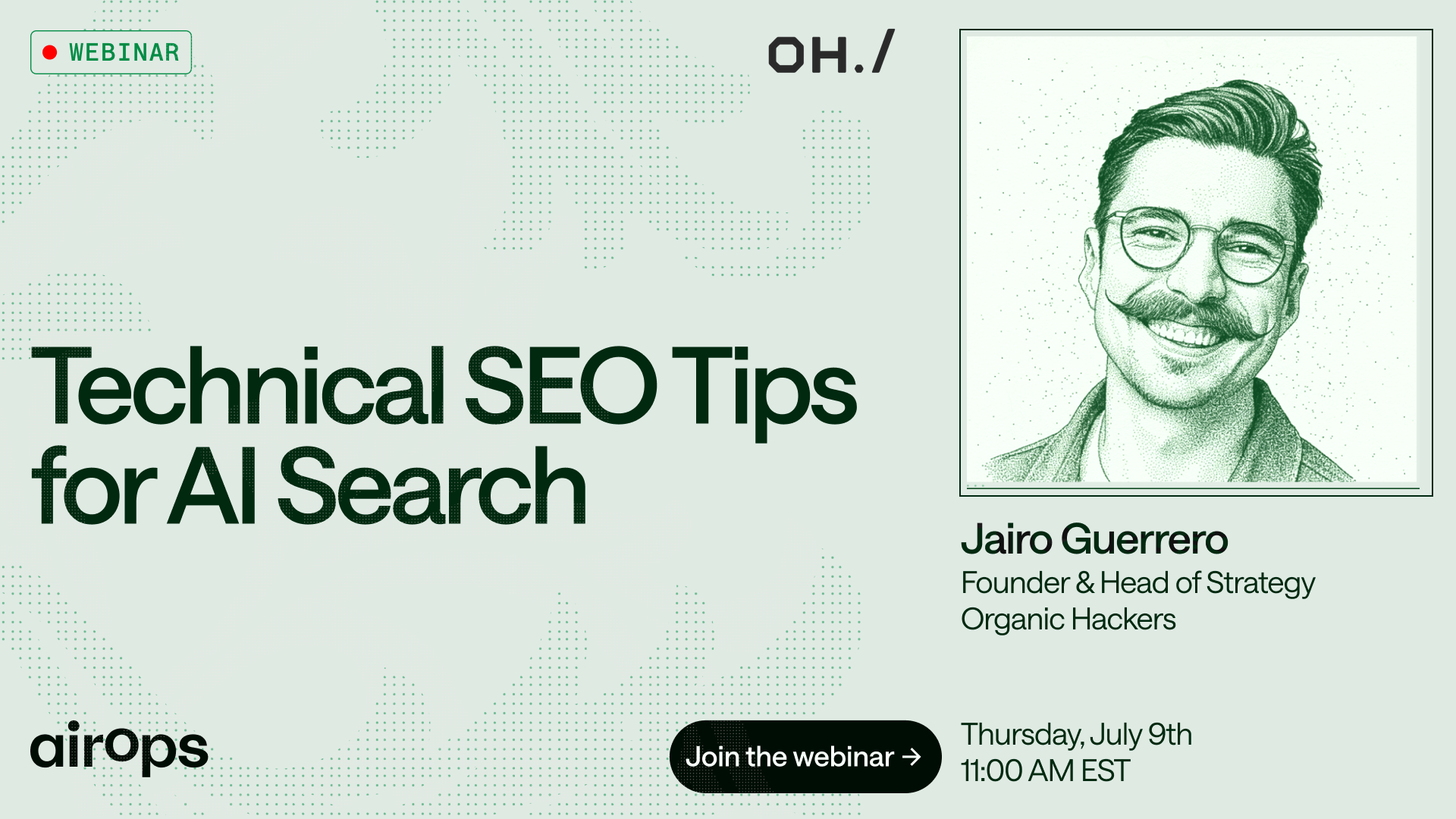
Your best page just lost a buyer to ChatGPT, and you'll never know it happened. Ranking on Google means nothing to AI search, which runs on its own rules for what gets cited.
On July 9 at 11am ET, Jairo Guerrero, Founder of Organic Hackers, shows you how to find out where you actually stand. He's spent years pulling raw server logs to see exactly how AI crawlers treat real pages, not theory, actual behavior.
You'll walk away knowing:
- How to check if AI crawlers are even reaching your pages right now
- The render and retrieval gaps that quietly disqualify strong content
- Which structured data signals actually influence what gets cited
- How to read your own server logs for crawler activity you're currently missing
This is the session that turns "why aren't we showing up" into a checklist you run the same week.
Can't make it live? Register anyway and get the recording in your inbox within 24 hours.
🧠 The Psychology of the Frequency Illusion
Have you ever noticed something once, then suddenly started seeing it everywhere?
In 1994, a reader wrote to a newspaper describing how, after first hearing the name of a German terrorist group, he began noticing references to it constantly. A decade later, a Stanford linguistics professor wrote about this exact experience and named it the frequency illusion, popularly known as the Baader Meinhof phenomenon.
Here's the marketing angle: once a potential customer notices your brand, they start noticing it again and again. The more they see you in their feeds, inboxes, and timelines, the more familiar and trustworthy you appear. Familiarity quietly builds into trust, and trust converts into sales.
So how do you put this to work?
Steps to Apply the Frequency Illusion:
1️⃣ Stay Present at Every Touchpoint
Map out where your customers spend time online and show up consistently. Retailers use retargeting ads to keep products in view long after a visit, since out of sight quickly becomes out of mind.
2️⃣ Make Visibility Your Strategy
Some of the fastest growing consumer brands win simply by appearing everywhere at once. You don't need millions of followers to do this; encouraging happy customers to share photos or tag you in exchange for a small incentive works just as well.
3️⃣ Repeat Your Signature Elements
Strong brands lean on a consistent symbol, mascot, or visual cue across decades, because repetition builds instant recognition. Decide what your audience already associates with you, then use it deliberately and often.
The Takeaway
Customers can't buy what they don't remember. Awareness is the first step, but staying visible through smart, consistent repetition is what turns a passing glance into genuine preference, and preference into sales.
📝 Teach Your AI Agent to Edit Like You
Want your AI assistant to match your exact writing style instead of generic output? Codex and Claude Code can learn your editorial voice through a simple draft, edit, and compare loop. This approach turns your past edits into reusable rules the agent follows every time.
Steps to Teach Your AI to Edit Like You:
1️⃣ Set Up Your Project Folder
Create folders for emails, rules, and skills. Inside emails, add a draft folder and a final folder so the agent can always tell which version is still in progress and which one has been approved.
2️⃣ Interview the Agent About Your Style
Prompt Codex or Claude Code to interview you about your editorial rules for marketing emails. Cover audience, tone, subject lines, claims to avoid, and CTA style, then have it turn your answers into a rules file.
3️⃣ Draft and Snapshot
Ask the agent to write one email using those rules and save two copies, a working draft and an unchanged snapshot. This gives you a clean before picture to compare against later.
4️⃣ Edit, Compare, and Update the Rules
Turn the draft into your approved final version, then have the agent compare the snapshot with the final and update the editorial rules based on what changed. Turn this entire process into a reusable skill for future emails.
The Takeaway
Codex and Claude Code can learn to write in your voice when you give them a structured way to capture your edits. By repeating the draft, edit, and compare loop, and even automating it daily, your AI agent keeps getting closer to writing exactly like you, with less manual cleanup every time.
We'd love to hear your feedback on today's issue! Simply reply to this email and share your thoughts on how we can improve our content and format.
Have a great day, and we'll be back again with more such content 😍