Why Your Meta Ads Stalled
🔍 The reach trap limiting your ad scale, plus Google's token efficient Gemini release

Hello Readers 🥰
Welcome to today's edition, bringing the latest growth stories fresh to your inbox.
If your pal sent this to you, then subscribe to be the savviest marketer in the room😉
In Partnership with Tatari
Your BFCM CAC problem starts before November.
By November, every brand is fighting for the same shoppers in the same channels: Meta, search, email, affiliates, and discounts. That’s when CAC gets expensive.
The brands that outperform during BFCM don’t just wait to capture demand. They create it earlier, often with channels their competitors haven’t fully tapped yet, like TV.
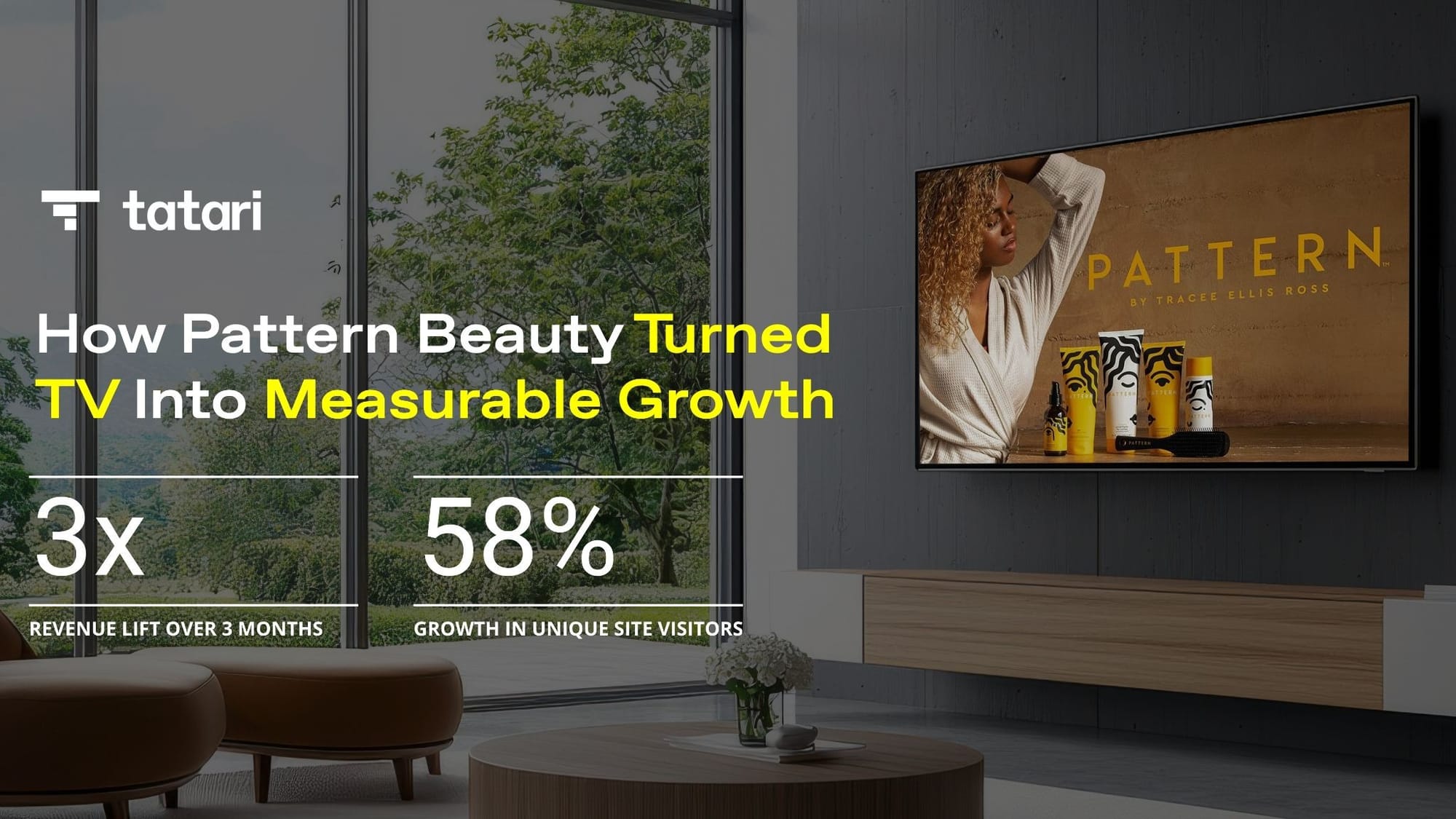
PATTERN Beauty shows what that can look like. With Tatari, the brand ran a phased 12-week campaign across streaming and linear to build awareness, drive site traffic, and measure revenue impact from day one. No massive TV budget required.
The results:
- 58% growth in unique site visitors
- 3x revenue lift from month one to month three on similar budgets
- 50% higher brand consideration than social and digital alone
TV didn’t replace PATTERN Beauty’s digital stack. It gave digital more demand to capture before shoppers were already in-market.
Over 400 brands like Jones Road Beauty, Fabletics, and Calm built TV into their core growth stack with Tatari. It shows you exactly where every dollar ran and what it produced.
Book a free demo and build demand with TV before Q4 gets crowded.
📈 Why Your Meta Ads Stopped Scaling
Most Meta accounts that hit a scaling wall aren't actually limited by budget. They're limited by how they handle reach, attribution, and creative variety. Here's what's really holding growth back and how to fix it.
1️⃣ Stop Overserving Your Warm Audience
Meta's algorithm naturally spends more on people who already know your brand, since they convert easiest. Left unchecked, this starves new audience discovery. Track "net new reach" (this month's reach minus last month's, divided by this month's total) and aim for 70%. Exclude past purchasers, site visitors, and past engagers from prospecting campaigns to force real audience expansion instead of resaturating the same warm pool.
2️⃣ Fix the Last-Touch Attribution Trap
Last-touch models give all the credit to the final ad before purchase, making earlier "introduction" ads look like failures even though they started the journey. Run three campaigns instead of two: one for testing, one scaling on first-touch attribution to find top-of-funnel winners, and one scaling on last-touch to reward bottom-of-funnel closers. This keeps introduction ads alive long enough to do their job.
3️⃣ Build Real Creative Diversity
Meta now reads visual and audio details, lighting, tone, setting, as targeting signals. Small hook-text tweaks on the same visuals still register as a single ad to the algorithm. True diversity means changing the framing, opening seconds, audio, and persona. Build three to five audience personas, each with its own creative style, and tag every ad with consistent naming conventions so you can track what's actually working.
The Takeaway
Scaling problems usually aren't about spend, they're about how Meta interprets reach, attribution, and creative signals. Fixing exclusions, attribution windows, and creative variety together is what unlocks growth again.
🚀 Google Releases Gemini 3.6 Flash
While everyone waits on Gemini Pro, Google quietly dropped Gemini 3.6 Flash and it's turning out to be a genuinely capable model in its own right. Fast, efficient, and surprisingly strong at frontend work, this release is worth a closer look before the bigger model arrives.
Lfg!! Google has just released Gemini 3.6 Flash 🔥
— Paul Couvert (@itsPaulAi) July 21, 2026
Many are waiting for Pro (me too) but this thing is suprisingly capable
- really fast
- good for frontend tasks
- surprisingly token efficient
And it can even manage to create pretty convincing 3D stuff like this simple Subway… https://t.co/WC7FvdcvWn pic.twitter.com/t8quAlWMMf
1️⃣ Built for Speed
Gemini 3.6 Flash is noticeably quick to respond, making it a solid pick for tasks where turnaround time matters more than raw power. Early testers are already comparing its speed favorably against other fast-tier models on the market.
2️⃣ Strong at Frontend Tasks
The model performs especially well on frontend development work, generating clean, usable code for interface-heavy projects. Developers building UI components and web layouts are finding it a reliable option for quick iteration.
3️⃣ Surprisingly Token Efficient
Despite its speed, Gemini 3.6 Flash doesn't burn through tokens the way many fast models do. This efficiency makes it more practical for high-volume use cases where cost per request adds up quickly.
4️⃣ Capable of Complex 3D Output
One standout demo shows the model producing a convincing 3D recreation of a Subway Surfers style game, a level of visual and spatial complexity not typically expected from a flash tier model.
5️⃣ Pro Tip for Better Coding Results
Enabling extended thinking mode in Gemini noticeably improves coding output quality. Developers testing the model recommend turning this on specifically for coding tasks to get more reliable results.
The Takeaway
Gemini 3.6 Flash is proving to be more than a stopgap ahead of Pro. With strong speed, token efficiency, and unexpected 3D capability, it's already earning attention from developers looking for a fast, cost effective model for frontend and coding work.
We'd love to hear your feedback on today's issue! Simply reply to this email and share your thoughts on how we can improve our content and format.
Have a great day, and we'll be back again with more such content 😍