The thirty ad structure you need
📊 Give every ad a fair test and let AI audit your website

Hello Readers 🥰
Welcome to today's edition, bringing the latest growth stories fresh to your inbox.
If your pal sent this to you, then subscribe to be the savviest marketer in the room😉
In Partnership with Insense
How Kulin Found a 2X ROAS Ad in Two Weeks
Finding creators becomes painfully slow when the brief requires a very specific profile. Manual searching can consume hours before production even starts.
Kulin Co faced exactly this problem. Its two-person creative team needed female beauty creators aged 40+ for an upcoming paid campaign.
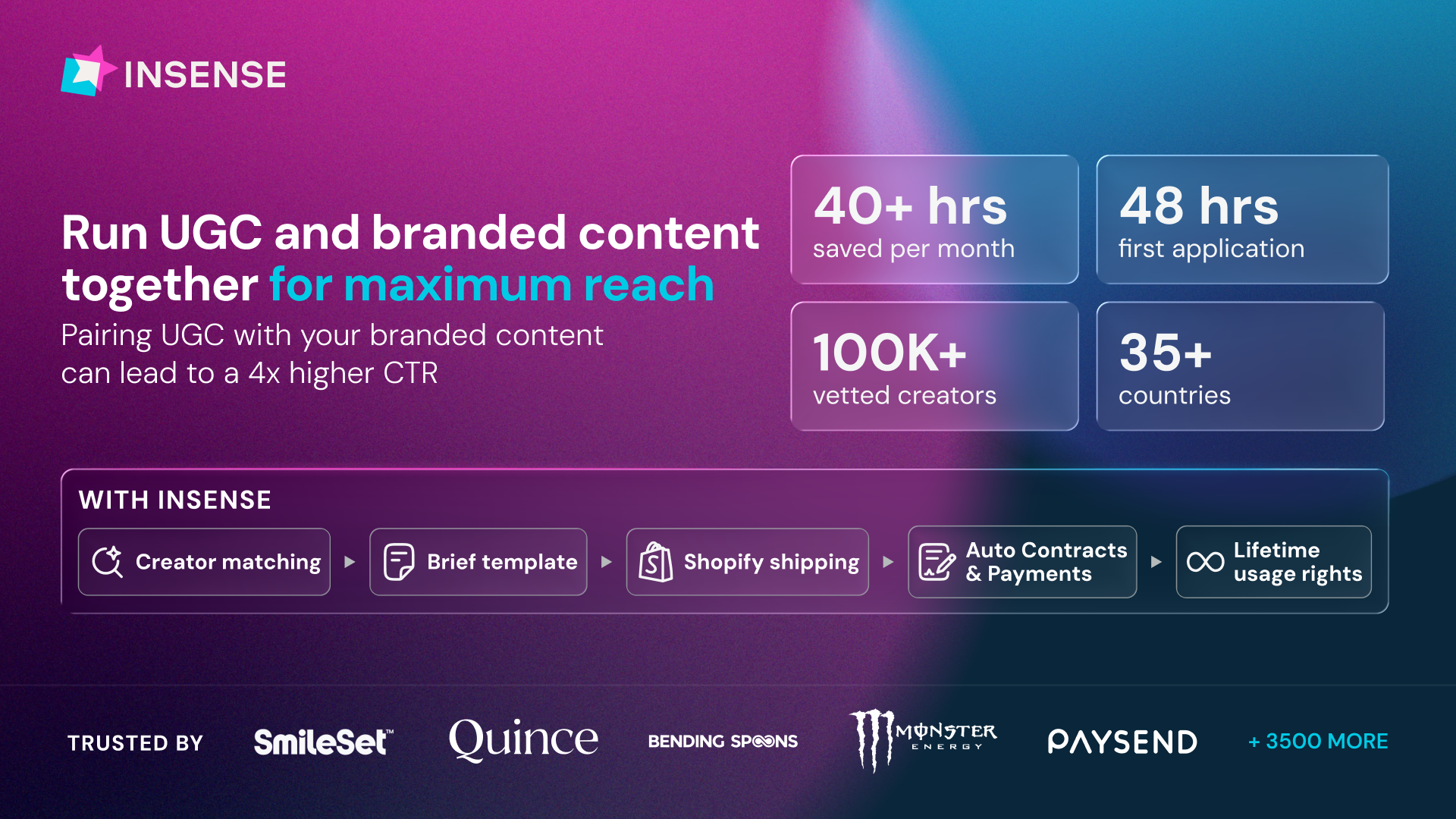
Insense gave the team a faster way to find them. Kulin filtered from 100,000+ vetted creators across 35+ countries by age, location, niche, and profile, then managed briefs and product shipping through the same platform.
Final UGC arrived within two weeks.
Kulin turned the raw footage into six paid ads, and the campaign achieved 2X ROAS.
No matter how specific the brief, Insense helps you find the right creator, and the first applications can arrive within 48 hours, and get content with lifetime usage rights.
Over 3500 brands like Strawberry.me, Bending Spoons, Wellhub, and PetLabCo trust Insense to make organic and paid work together, not separately.
Book a strategy call by August 14th for $200 platform credits for your first campaign!
💡 Improve Ad Performance with One Campaign and 30 Ads
Advertising accounts often become difficult to manage when budgets, audiences, and creatives are divided across too many campaigns and ad sets. A consolidated testing structure can give the advertising algorithm more data, improve budget allocation, and help more creative concepts reach potential customers.
Here is how to test 30 ads within one campaign.
1️⃣ Create One Consolidated Campaign
Set up one automated sales campaign instead of separating every audience or creative idea into different campaigns.
Consolidation allows the system to direct more of the daily budget toward the audiences and advertisements generating the strongest results.
2️⃣ Divide Ads Across Three Ad Sets
Create three ad sets with broad targeting while excluding previous purchasers. Use a seven day click attribution window, value focused bidding, and a minimum spend requirement of 20 percent for each ad set.
The spending minimum ensures that every ad set receives enough budget to produce meaningful performance data.
3️⃣ Add Ten Ads to Each Ad Set
Place ten advertisements inside every ad set, creating a total of 30 ads.
Keep the product, advertising copy, headline, and destination page consistent across the campaign. Change only the creative execution, such as the opening hook, visual style, format, angle, or product demonstration.
This makes it easier to understand which creative concepts are influencing performance.
4️⃣ Give Every Concept Time to Perform
Without spending controls, an advertising algorithm may quickly favour one advertisement and provide limited delivery to the others.
The minimum spend structure encourages broader testing across all three ad sets. This allows more concepts to reach new audiences and uncover stable groups of buyers.
The Takeaway
A consolidated campaign with 30 ads can improve cost per purchase, return on advertising spend, and click performance compared with smaller testing structures.
By combining budget efficiency, creative variety, and controlled spending, advertisers can test more ideas without dividing performance data across too many campaigns. Start testing this structure early so you can identify reliable creative concepts before the busiest sales periods begin.
Build Your Own AI SEO Specialist with Gumloop
SEO audits often require reviewing technical issues, backlinks, outdated content, and page performance across several tools. Gumloop can simplify this process by creating a coordinated team of AI agents that reviews your website and organizes every finding inside one Google Sheets workbook.
Here is how to build your AI SEO specialist.
1️⃣ Create an SEO Audit Agent
Open Gumloop and create a new AI agent. Connect the agent to Google Sheets and instruct it to create an SEO audit workbook.
The workbook should include separate sections for technical issues, backlinks, content updates, priorities, recommended actions, and completion status. This gives you one organized place to review the entire audit.
2️⃣ Choose a Page to Review
Select one important page from your website and copy its URL.
Start with a product page, landing page, service page, or article that receives valuable traffic. Testing one page first helps you improve the workflow before auditing the entire website.
3️⃣ Connect the Agent to Firecrawl
Connect your Gumloop agent to Firecrawl and provide the selected URL.
Ask the agent to crawl the page, complete a technical SEO audit, and add its findings to the Google Sheets workbook. It can review areas such as metadata, headings, internal links, page structure, indexability, and technical errors.
4️⃣Create Specialist Agents
Build separate Backlink and Content Refresh agents using the same setup.
The Backlink Agent can identify linking opportunities and potential authority gaps. The Content Refresh Agent can find outdated information, missing topics, weak sections, and opportunities to improve relevance.
5️⃣ Expand the Audit
Give your main SEO agent the website URL and ask it to coordinate the other agents. Instruct it to audit the first 25 pages it discovers and compile all results in the workbook.
The Takeaway
Gumloop allows you to create an AI powered SEO team without manually reviewing every page. By combining Gumloop, Firecrawl, and Google Sheets, you can automate technical audits, backlink analysis, content updates, and reporting through one coordinated workflow.
We'd love to hear your feedback on today's issue! Simply reply to this email and share your thoughts on how we can improve our content and format.
Have a great day, and we'll be back again with more such content 😍