Stop Losing Buyers Above Fold
🤖 Simplify your homepage experience and unleash autonomous AI workflows

Hello Readers 🥰
Welcome to today's edition, bringing the latest growth stories fresh to your inbox.
If your pal sent this to you, then subscribe to be the savviest marketer in the room😉
In Partnership with Planable
The AI event for marketing leaders: BreakingSilos 2026 On June 9th
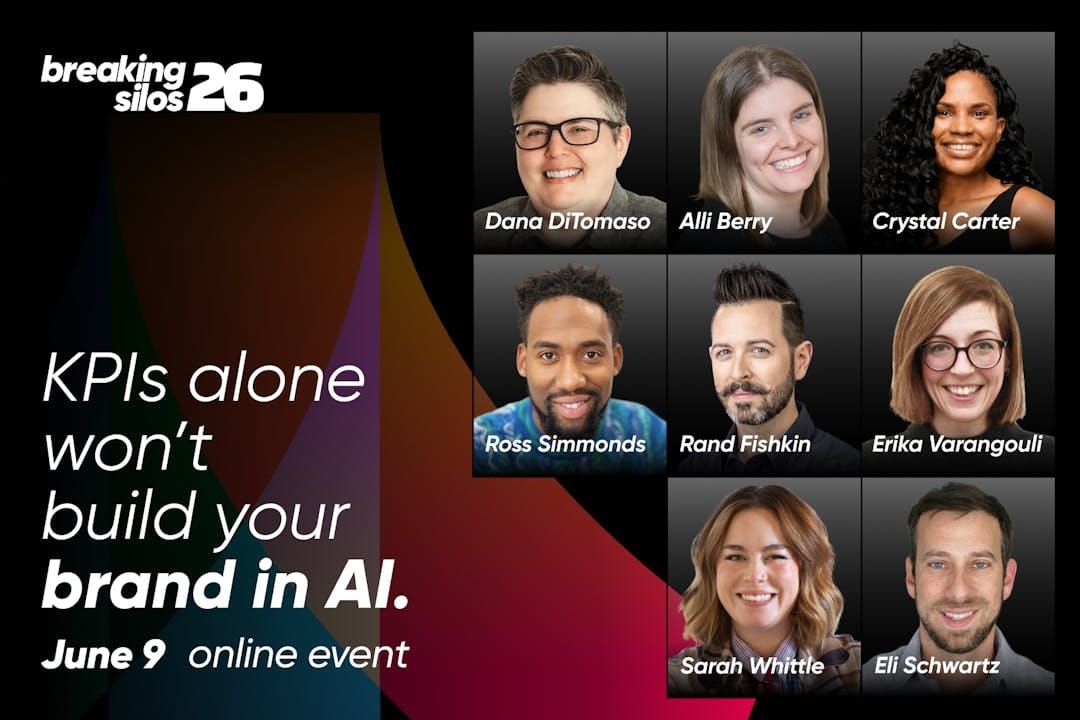
AI is answering for your brand. You didn't write those answers.
AI tools are already forming opinions about your brand using signals you never curated. Recommending competitors. Shaping buyer decisions before your funnel even starts.
BreakingSilos 2026 brings together the practitioners who've cracked this. Free. Online. June 9th.
The sessions go deep on why AI forms brand opinions from signals you never controlled, where attribution is silently bleeding your BOFU performance, and what a cross-channel signal strategy actually looks like in 2026.
You'll leave with:
- A clear map of how AI decides which brands to surface and what inputs actually move the needle
- A cross-channel framework connecting your SEO, social, PR, and content signals into one strategy
- The language and data to get your org aligned around ecosystem thinking
30+ sessions. 70+ speakers. Zero vendor pitches.
Book your free spot today and find out where the signal breaks.
📝 Perfect Your Above The Fold Design
Your website gets only a few seconds to make a first impression. Visitors decide almost instantly whether to stay, scroll, or leave. That's why your Above The Fold (ATF) section, the portion users see before scrolling, plays a critical role in conversion rates.
Many brands make the mistake of overcomplicating this area with creative layouts and flashy visuals. In reality, visitors are already familiar with how websites work. The goal isn't to reinvent navigation. It's to guide users toward action as quickly and clearly as possible.
Here’s how to build a high-converting ATF section:
1️⃣ Lead with clear messaging
Your headline should communicate a specific benefit and immediately answer, "What's in it for me?" Support it with a hook that either addresses a common objection or makes a compelling promise. Then use your subheadline to explain exactly what your product does.
2️⃣ Use visuals that reduce uncertainty
Images should do more than look attractive. They should demonstrate value. Show your product in action, display real use cases, or provide a preview of the customer experience. Effective visuals help visitors understand what they're getting before they commit.
3️⃣ Embrace negative space
A cluttered ATF overwhelms visitors. Strategic spacing helps important elements stand out and creates a cleaner, more trustworthy appearance. Simplicity often signals confidence and professionalism.
4️⃣ Simplify navigation
Too many links create decision fatigue. Keep navigation focused on the most important actions. A streamlined menu helps visitors stay focused on the path you want them to take.
5️⃣ Create action-oriented CTAs
Your call-to-action should naturally continue the story started by your headline. Use specific, benefit-driven language that encourages visitors to take the next logical step rather than making a large commitment immediately.
The Takeaway
A strong Above The Fold section combines clarity, trust, and focus. When visitors instantly understand your value and know exactly what to do next, conversion rates improve. Great design isn't about being flashy. It's about making decisions easy.
📝 Gemini Spark Brings AI Agents Mainstream
AI assistants have become increasingly capable over the past few years, but most still require constant prompting and supervision. Google's latest announcement, Gemini Spark, aims to change that by introducing an autonomous AI agent designed to work independently on behalf of users.
What makes this announcement particularly significant is not just the technology itself, but the timeline. Instead of being a distant concept or future roadmap item, Gemini Spark is expected to be available almost immediately, bringing autonomous AI capabilities into everyday workflows much sooner than many anticipated.
Gemini Spark might be the most impressive AI announcement of this year. No joke.
— Paul Couvert (@itsPaulAi) May 19, 2026
That's a real autonomous agent available 24/7 in Gemini
- Can grab context from Gmail, Web, Drive, etc.
- Work autonomously on any task
- Available even from your phone
And we're NOT talking about… pic.twitter.com/xOZxCKul2u
Here’s what makes Gemini Spark stand out:
1️⃣ Access Information Across Your Digital Life
Gemini Spark can pull context from multiple Google services, including Gmail, Drive, and web-based information. This allows the agent to understand ongoing projects, retrieve relevant details, and work with information spread across different platforms.
2️⃣ Complete Tasks Autonomously
Unlike traditional AI assistants that respond only when prompted, Gemini Spark is designed to handle tasks independently. Users can assign objectives and allow the agent to execute workflows without requiring constant oversight or step-by-step instructions.
3️⃣ Available Around the Clock
The agent operates continuously, making progress on assigned work even when users are busy with other priorities. This creates the possibility of having a digital assistant actively managing tasks in the background throughout the day.
4️⃣ Mobile First Accessibility
Gemini Spark isn't limited to desktop environments. Users can access and manage their AI agent directly from their phones, making autonomous assistance available wherever they are.
5️⃣ A Glimpse Into Agentic AI
The launch represents a major shift from conversational AI toward agentic AI, where systems don't just answer questions but actively perform work on behalf of users.
The Takeaway
Gemini Spark signals a new era of AI assistance. By combining deep integration, autonomous task execution, and mobile accessibility, Google is moving beyond chatbots and toward always-on digital agents that can help manage work, information, and productivity in real time.
We'd love to hear your feedback on today's issue! Simply reply to this email and share your thoughts on how we can improve our content and format.
Have a great day, and we'll be back again with more such content 😍