Match your creative to funnel
🎨 Four AI creative approaches top brands use, plus a simple way to test cheaper AI models

Hello Readers 🥰
Welcome to today's edition, bringing the latest growth stories fresh to your inbox.
If your pal sent this to you, then subscribe to be the savviest marketer in the room😉
In Partnership with AirOps
Your Buyers Asked AI. Did Your Brand Appear?
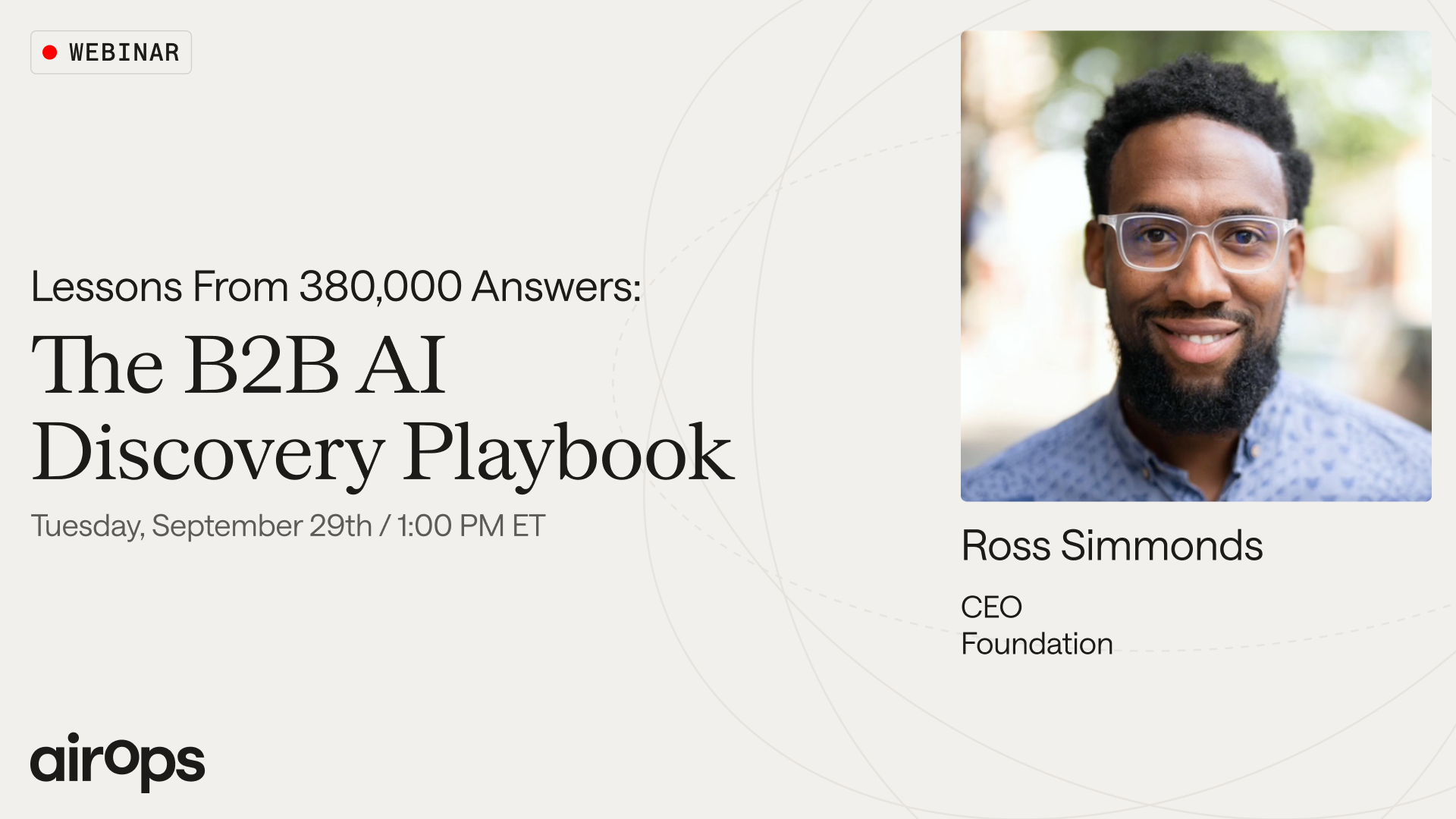
AI is already deciding which B2B tools reach your buyers’ shortlists. If your brand is missing from trusted sources, competitors can win consideration before sales enters the conversation.
On September 29, Foundation CEO Ross Simmonds and AirOps search marketing lead Josh Spilker will unpack research spanning nearly 380,000 AI answers, 3 million citation events, and 81 enterprise software topics.
You’ll walk away knowing how to:
- Build a platform-specific source map across six AI engines, showing where to earn visibility for the buying prompts that matter
- Turn the 84-of-100 dominance of comparison pages and listicles into a clear publishing plan for content AI platforms already cite
- Find and fix unfavorable comparisons before they spread across hundreds of answers and quietly steer buyers toward competitors.
You’ll leave knowing which prompts to track, which sources to prioritize, and where your team should invest first to influence AI-driven buying decisions.
Join live at 1 p.m. ET on September 29.
🤖 Build AI Creative That Actually Converts By Funnel Stage
Generative AI has made it easier than ever to produce ad creative at scale, but volume without craft still falls flat. The strongest brands are not just producing more assets faster; they are using AI to create intentional visuals with clear composition, product context, and room for persuasive copy.
Four Creative Approaches by Funnel Stage:
1️⃣ Lifestyle With Product-Focused Copy
Keep the composition simple, using an intimate setting and clear negative space so the copy can do the heavy lifting. The in-creative copy should communicate the product, problem, benefit, or occasion within a few seconds.
2️⃣ Lifestyle With Sale Badges
A discount alone is not enough for cold audiences who have never heard of you. Pair promo information with a high-confidence product one-liner so people understand what the product does before they even click.
3️⃣ AI Renders That Remove Friction
For middle and bottom funnel audiences, identify what stops someone from buying for the first time. Address price concerns, uncertainty, or risk directly, and skip brand education since these customers already know you.
4️⃣ AI Creative With Social Proof
Borrow credibility and language from a trusted partnership to speak directly to your audience. A strong aesthetic fit matters, but the real power comes from making sure the audience segmentation actually lines up too.
The Takeaway
The brands winning with AI creative are not chasing volume alone. They are pairing thoughtful visuals with copy that does real work at every stage of the funnel, from first impression to final purchase decision.
🔌 Add More AI Models to Codex and Claude Code
Looking to give your AI agent access to more models without switching platforms. This guide from The Rundown shows you how to use OpenRouter to add new models to tools like Codex and Claude Code, compare pricing, and test cheaper options for tasks like making ad mockups.
Steps to Set Up OpenRouter With Your Agent:
1️⃣ Browse the Model Catalog
Sign in to OpenRouter and browse the model catalog. Filter for your specific task, then sort by low to high price. Open a model page to check its capabilities and cost before choosing one.
2️⃣ Create Your API Key
Open API Keys, choose New Key, and name it after the project or agent you plan to use it with. Set a spending limit and an expiration date before creating the key.
3️⃣ Connect Your Agent
Ask your agent, such as Claude Code, to help you set up OpenRouter. Store the key privately using its setup instructions, then give it the model name along with a small task to test.
4️⃣ Compare Your Results
Compare the results and check usage directly inside OpenRouter. In testing, cheaper image models were useful for direction but did not fully match the real product or a premium model output.
The Takeaway
OpenRouter makes it simple to expand what your AI agent, including Claude Code, can access without locking yourself into a single model. Testing cheaper options first can save money while you figure out what actually works for your specific task. Give it a try before your next AI project.
We'd love to hear your feedback on today's issue! Simply reply to this email and share your thoughts on how we can improve our content and format.
Have a great day, and we'll be back again with more such content 😍