Your consent strategy costs millions
💡 Why your checkout loses money and how to design apps with voice

Hello Readers 🥰
Welcome to today's edition, bringing the latest growth stories fresh to your inbox.
If your pal sent this to you, then subscribe to be the savviest marketer in the room😉
In Partnership with Norton Neo
AI That Lives In Your Browser. Not In The Cloud.
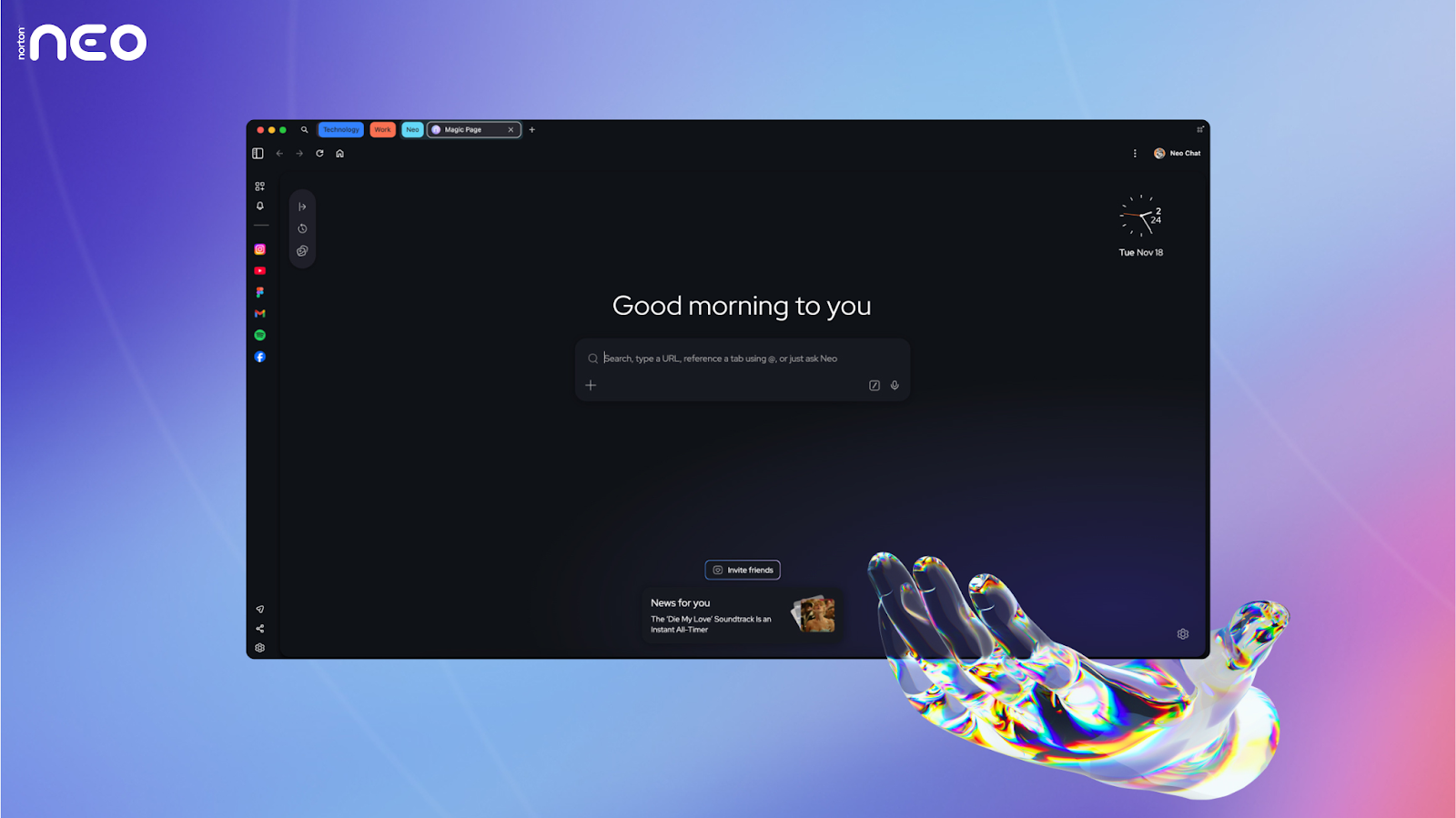
You had exactly what you needed open. Then your browser crashed and took all 23 tabs with it. The research, the doc, the three reference pages, gone.
Now you're spending 20 minutes rebuilding a session that took two hours to build.
Norton Neo is the world's first AI-native browser, meaning the AI isn't an extension you installed; it lives inside the browser itself.
It tracks your open tabs, understands how you're working, and keeps your context safe so when something goes wrong, you're not starting from zero.
- Recover full sessions across any device instead of rebuilding from scratch
- Tabs are organized by context, not the order you opened them
- Keep browsing history local so sensitive research never leaves your machine
- Block phishing and malicious sites before they compromise payments or logins
No extra extensions stacking up. No AI tools floating in separate tabs. Just a browser built for how people actually use the web today.
If you want early access to what’s coming next, join the Norton Neo Discord and connect directly with the team building it.
📝 Fix the Hidden Checkout Revenue Leak
Most brands never choose a consent strategy. They inherit one.
Default checkout settings may feel safe, but they quietly limit how much revenue you can capture. The problem is simple. Customer preferences and regulations vary across regions, yet most brands apply a single, rigid experience everywhere.
This creates a massive performance gap.
Here is what the data shows:
The Regional Gap:
Default settings vary widely across markets. Opt-in rates sit around 61 percent in North America, drop to roughly 9 percent in Europe, and average near 13 percent for global brands using a strict one-size approach.
Optimized setups tell a different story. With region-aware consent, brands can reach up to 90 percent in North America, 74 percent in the UK, and nearly 60 percent across Europe.
That gap represents lost revenue.
What High Performers Do Differently:
Leading brands move from static to dynamic consent systems. Instead of treating every buyer the same, they adapt in real time based on context.
They optimize for:
Geography: Align consent with local regulations rather than applying the strictest global standard.
Customer status: First-time buyers and repeat customers should not see the same experience.
Purchase behaviour: Use existing data to increase opt-in relevance.
Smart suppression: Maintain compliance without damaging the user experience.
The Growth Impact:
Low consent rates compound the loss. Every missed opt-in means paying again to reacquire the same customer. In a world of rising acquisition costs, this becomes expensive fast.
Even modest improvements in opt-in rates can unlock significant lifetime value and improve payback periods.
The Takeaway
Your checkout is not just a transaction point. It is where ownership begins.The brands that win are not just acquiring customers. They are building systems that keep them.
Your ROAS Is Lying to You
Revenue is up, and campaigns are scaling, yet ROAS reflects only platform efficiency. It does not account for processor fees, delayed refunds, fulfilment costs, or tax accumulating in the background. Without reconciled books, the margin becomes a projection.
When reconciliations lag or when inventory data sits in another system, gaps form between reported profit and actual cash. The strain surfaces later, often when a supplier invoice or payout delay compresses liquidity.
At MNH Advisory, they run disciplined monthly bookkeeping so your accounts are reconciled against real activity and your reporting reflects actual margin.
That gives you visibility without committing to a full-time $80K to $120K finance hire.
If you are spending aggressively to grow, your numbers should not lag.
Book your free strategy call today!
📝 Design Apps Using Just Your Voice
Building apps just got a major upgrade.
You no longer need to design every screen or manually write complex instructions. With the latest update, you can now create full web and mobile app experiences simply by speaking what you want.
This shifts app building from technical execution to creative direction.
Google has just updated Stitch
— Paul Couvert (@itsPaulAi) March 18, 2026
You can now vibe design full web and mobile apps just with your voice 🔥
1. Start with a single prompt
2. Enable the voice mode
3. Explain what you want
4. The agent takes care of it
And the whole canvas is AI native!pic.twitter.com/VcQpoFGgkK
Steps to Build Apps with Voice First Design:
1️⃣ Start with a Simple Prompt
Begin by giving a basic instruction. This could include building a dashboard, a landing page, or a mobile app interface. The system uses this as the foundation.
2️⃣ Enable Voice Mode
Switch on voice interaction. Instead of typing detailed requirements, you can now describe your ideas naturally, just like explaining to a designer or developer.
3️⃣ Describe Your Vision
Explain layouts, features, flows, and interactions using your voice. You can refine in real time by adding context like colors, sections, or user journeys. The more clarity you provide, the better the output.
4️⃣ Let the Agent Execute
The AI agent translates your voice instructions into a working design. It handles structure, layout, and flow automatically, eliminating the need for manual design.
5️⃣ Iterate on an AI Native Canvas
The entire workspace is built for AI interaction. You can continuously adjust, improve, and expand your app by simply speaking changes, making the process fast and intuitive.
The Takeaway
App building is becoming conversational. The faster you can express ideas, the faster you can build. Voice-first design turns anyone into a creator, dramatically reducing the time from concept to execution.
We'd love to hear your feedback on today's issue! Simply reply to this email and share your thoughts on how we can improve our content and format.
Have a great day, and we'll be back again with more such content 😍