Why easy choices feel hard
🧠 The bias slowing conversions plus Google Labs tools to create content faster

Hello Readers 🥰
Welcome to today's edition, bringing the latest growth stories fresh to your inbox.
If your pal sent this to you, then subscribe to be the savviest marketer in the room😉
In Partnership with Section
The AI Marketing Systems You Can Implement Tomorrow - January 29 | Free Virtual Event

If you’re still “experimenting” with AI while your team ships the same campaigns, you’re not early, you’re late.
Tomorrow (12 to 4 PM ET), join Section’s free virtual AI Marketing Strategy Summit featuring Scott Galloway (Professor of Marketing, NYU Stern) and a tight lineup of leaders who’ve actually built modern growth systems.
- Get the AI marketing moves that drive measurable lift
- Learn what matters in 2026 so you stop chasing shiny tools
- Walk away with strategies you can deploy the very next day
Featuring Kieran Flanagan (SVP of Marketing, HubSpot), Aude Gandon (Chief Digital & Marketing Officer, Estée Lauder), and Dan Slagen (SVP of Marketing, Zapier).
📝 Understand Why Easy Feels Hard and Hard Feels Easy
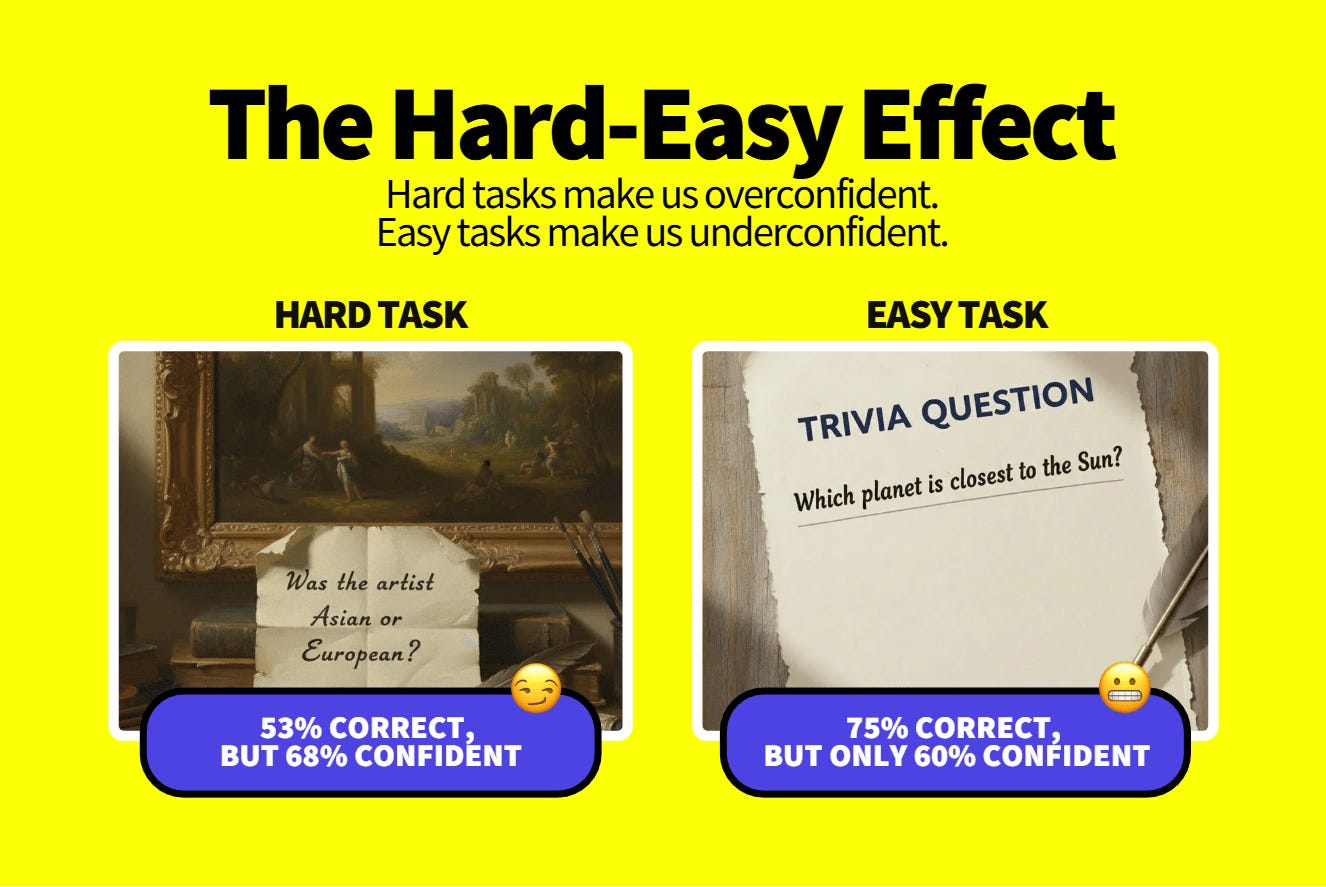
Buying decisions are rarely based on accurate self-assessment. One powerful cognitive bias explains why customers hesitate on simple choices and overcommit to complex ones. This bias is known as the hard–easy effect.
When a task is difficult, people tend to be overconfident. They lack the knowledge needed to recognize mistakes, so they assume they did better than they actually did. When a task is easy, the opposite happens. People know enough to overthink small details, doubt themselves, and delay decisions.
This mismatch between confidence and reality has major implications for marketing, especially when customers must decide quickly.
Steps to Apply the Hard–Easy Effect in Marketing
1️⃣ Break Down What Feels Hard
If a task looks intimidating, customers hesitate. Reduce fear by showing each step clearly. Visual breakdowns, progress indicators, and simple demonstrations make complex actions feel achievable.

2️⃣ Remove Friction From Easy Decisions
When a choice is actually simple, avoid overwhelming users with too many details. Clear defaults, short explanations, and confident guidance prevent unnecessary second-guessing.
3️⃣ Use Visual Proof Over Explanations
Seeing progress or outcomes builds confidence faster than reading claims. Showing how something works lowers perceived difficulty and speeds up action.
4️⃣ Highlight What People Miss
If customers underestimate a task’s complexity, reveal hidden challenges and explain how your solution handles them. This reframes your product as necessary support rather than an optional extra.
5️⃣ Guide Attention With Structure
Step-by-step flows, curated options, and clear recommendations help customers feel oriented. Structure reduces mental load and increases trust.
The Takeaway
Customers are not good judges of difficulty. They overestimate themselves when things are hard and doubt themselves when things are easy. Brands that succeed design for this mismatch. When you simplify intimidating tasks and prevent overthinking on simple ones, you align perception with reality. That alignment builds confidence, speeds decisions, and increases conversions.
📝 Build Marketing Assets With Free Google Labs AI Tools
Looking to create high-quality marketing content without adding new software costs? Google Labs offers a growing collection of free AI experiments that can help you generate ads, visuals, videos, and even music in minutes. Many of these tools fly under the radar, but when combined, they form a surprisingly powerful creative workflow for marketers.
Steps to Build Marketing Content Using Google Labs
1️⃣ Explore the Google Labs Experiments Hub
Start by visiting labs.google/experiments. This page lists all active Google Labs tools and experiments. Each tool focuses on a different creative task, from text and images to video and audio.
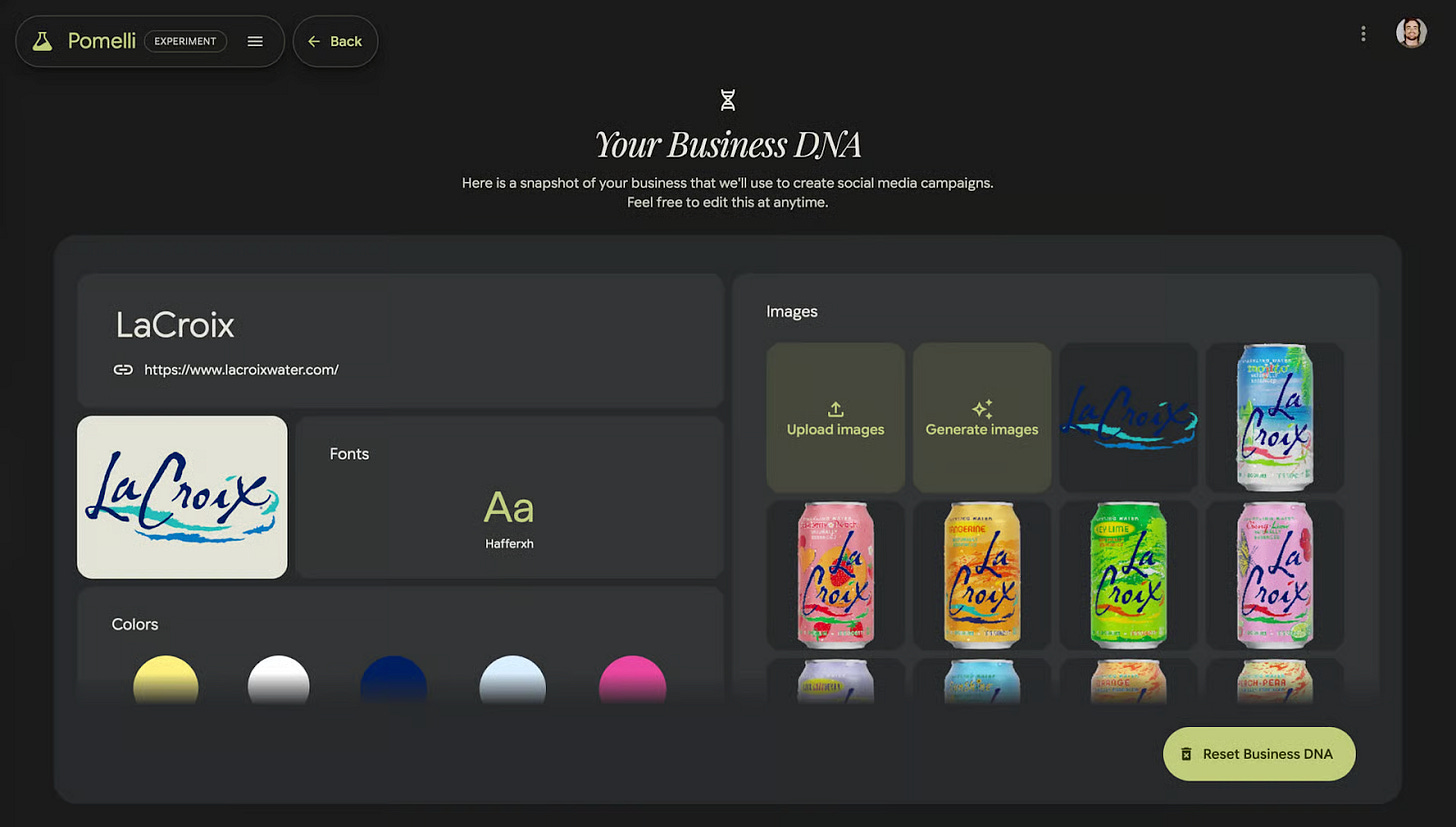
2️⃣ Generate Campaign Concepts With Pomelli
Pomelli is designed to turn existing brand signals into ready-made marketing ideas. Paste your brand’s website URL into Pomelli and let the tool analyze your positioning, visuals, and messaging. After a few minutes, it generates tailored ad campaign concepts, often including suggested copy, image directions, and video ideas. This works well for brainstorming paid ads or social campaigns quickly.
3️⃣ Create Short Videos With Flow
Next, move to Flow for video creation. Start by generating a beginning frame and an ending frame using Create Image. Then, add those frames to Frames to Video and write a prompt describing the transition. Flow generates short clips that you can stitch together using the scene builder, making it easy to create lightweight marketing videos without editing software.
4️⃣ Refine Visuals With ImageFX
Use ImageFX to iterate on images. Experiment with suggested styles to improve your prompts, and lock the image “seed” to keep outputs consistent across variations. This is especially useful for maintaining visual cohesion across a campaign.
5️⃣ Add Sound With MusicFX
For extra polish, switch from ImageFX to MusicFX using the dropdown. Generate background music that matches the mood of your content without licensing concerns.
The Takeaway
Google Labs turns AI experimentation into a practical marketing toolkit. By combining Pomelli, Flow, ImageFX, and MusicFX, you can ideate, create, and refine campaigns quickly, all without paying for additional tools.
We'd love to hear your feedback on today's issue! Simply reply to this email and share your thoughts on how we can improve our content and format.
Have a great day, and we'll be back again with more such content 😍