Turn Checkout Into Growth Engine
📊 Boost retention from checkout consent plus explore next gen AI cloud computers

Hello Readers 🥰
Welcome to today's edition, bringing the latest growth stories fresh to your inbox.
If your pal sent this to you, then subscribe to be the savviest marketer in the room😉
In Partnership with Delve
Migrate to Delve and get a $2,000 VISA card in your inbox
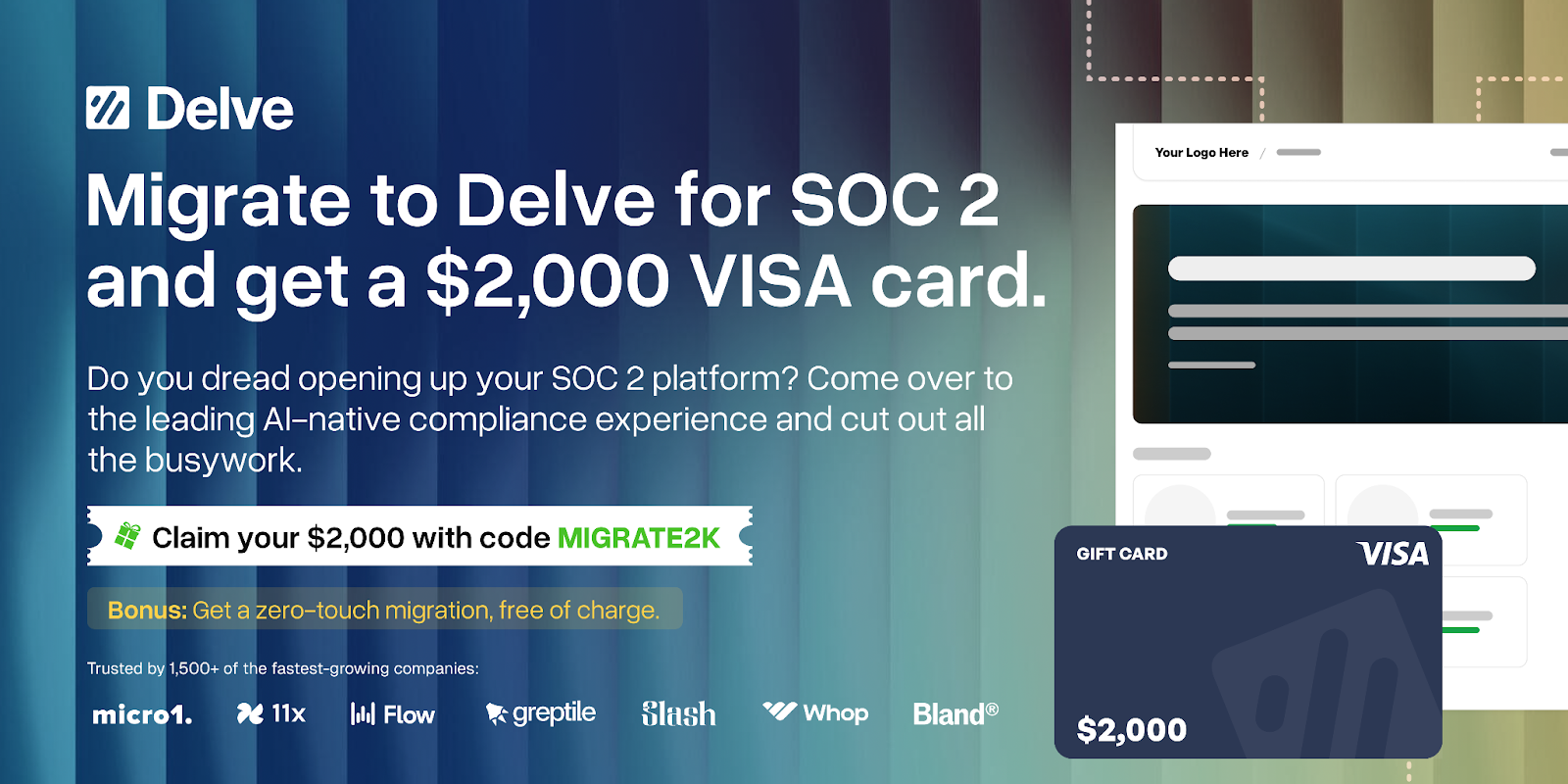
Delve is the AI-native compliance platform that actually does the work for you, auto-collecting evidence from AWS, GitHub, and your stack so you don't have to chase screenshots or babysit integrations.
Use AI security questionnaire tooling, AI Copilot, and everywhere else to make compliance feel less dreadful. Welcome to the new age.
The proof is in the pudding:
Bland → Switched, got compliant, and unlocked $500k ARR in 7 days
11x → Streamlined audits and moved faster on enterprise deals
micro1 → Scaled compliance without adding headcount.
Bonus: Delve will handle your migration for free. Zero-touch. No disruption. No starting over.
If you're dreading opening your current SOC 2 tool, that's your sign.
📝 Fix Your Checkout Consent Strategy
Most brands rely on default checkout settings without realizing the cost. What feels like the safest option is often limiting your growth. Consent strategy is not just compliance. It directly impacts how much future revenue you capture.
Steps to Optimize Your Consent Strategy:
1️⃣ Understand Regional Differences:
Privacy laws and customer behavior vary across regions. A one-size-fits-all approach forces every customer into the strictest experience. This leads to low opt-in rates and lost retention opportunities. Instead, tailor consent based on geography to align with local expectations and regulations.
2️⃣ Identify the Performance Gap:
Default setups often underperform. While some regions can achieve high opt-in rates, many global brands operate far below potential due to overly cautious settings. This creates a hidden gap between what your acquisition spend could generate and what it actually returns.
3️⃣ Move From Static to Dynamic Systems:
High-performing brands adapt consent in real time. Your checkout should respond to factors like customer location, purchase history, and whether they are new or returning. Intelligent suppression ensures compliance without hurting the user experience.
4️⃣ Calculate the Opportunity Cost:
Low consent rates compound over time. Use a simple formula to estimate missed revenue based on your current opt-in rate, order volume, and customer value. Even small improvements can unlock significant long-term gains.
The Takeaway
Consent at checkout is not a checkbox. It is a growth lever. By shifting from static defaults to dynamic, region-aware systems, you increase opt-ins, reduce dependency on paid channels, and build stronger customer relationships. The goal is not just compliance, but ownership of your audience.
You Earn Well. But Is It Organised?
You generate consistent income. Clients pay. Work moves fast.
But bookkeeping usually sits in the background. Transactions wait to be reconciled. Accounts are updated only when necessary. Everything feels manageable until it suddenly isn’t.
When records fall behind, clarity fades, and tax planning shifts from proactive to reactive, slowing decisions and weakening control over time.
High earners do not struggle because they lack income. They struggle because they lack structured financial visibility.
At MNH Advisory, they handle your monthly bookkeeping runs on a fixed cadence, so your numbers are reconciled to the bank, and your reporting is grounded in actual cash movement.
That gives you financial control without committing to another full-time hire.
If you operate at a serious level, your books should reflect it.
👉 Book your free strategy call today!
📝 Build Your Own AI Cloud Computer with MuleRun 2.0
What if your computer didn’t just respond to commands but acted on your behalf? The next wave of computing is shifting toward AI-powered “cloud computers” where agents handle tasks, decisions, and workflows automatically.
MuleRun 2.0 is built around this idea. It acts like a personal AI system that works before you even ask.

Steps to Understand AI Cloud Computers:
1️⃣ Access From Anywhere:
MuleRun 2.0 runs in the cloud, not tied to a single device. You can access your workflows, tools, and data from anywhere. This removes hardware limitations and creates a seamless experience across devices.
2️⃣ Build and Execute Freely:
You are no longer restricted by traditional software. With MuleRun 2.0, you can build workflows, automate tasks, and execute ideas without deep technical skills. The system translates your intent into action.
3️⃣ Let Agents Understand Intent:
Instead of giving step-by-step instructions, you define outcomes. MuleRun’s AI agents interpret your intent, break tasks into steps, and execute them automatically. This shifts computing from commands to outcomes.
4️⃣ Connect Your Existing Tools:
MuleRun 2.0 integrates with your current apps and systems. Whether it is communication, analytics, or operations, everything connects into one ecosystem where agents can act across tools.
The Takeaway
MuleRun 2.0 represents a shift where AI becomes the computer itself. It learns your habits, anticipates your needs, and works in the background. The future of productivity is not about doing more tasks manually, but building systems that operate for you continuously.
We'd love to hear your feedback on today's issue! Simply reply to this email and share your thoughts on how we can improve our content and format.
Have a great day, and we'll be back again with more such content 😍