The hidden flaw in funnels
🔍 Social ads need new funnels, plus AI can now build apps autonomously

Hello Readers 🥰
Welcome to today's edition, bringing the latest growth stories fresh to your inbox.
If your pal sent this to you, then subscribe to be the savviest marketer in the room😉
Partnership with Insense
Get fully-licensed UGC footage from brand-matched influencers
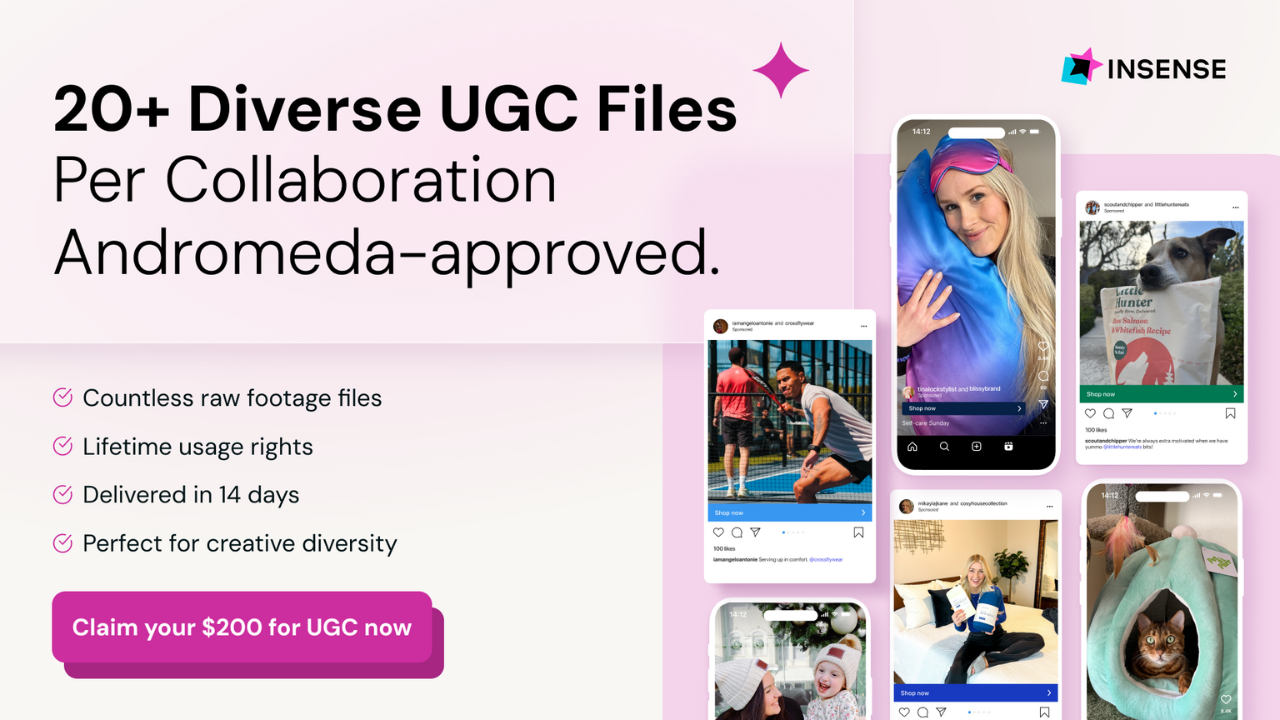
The secret to high-performing UGC ads? Influencer-brand alignment.
The problem? Manually sifting through thousands of creators to find the perfect match is a time-consuming nightmare.
You need Insense’s carefully vetted marketplace of 75,000+ UGC creators and micro-influencers from 35+ countries across the USA, Canada, EMEA, and Latin America.
Dermatologists for your skincare brand? They’ve got it!
Watch collectors? LGBTQ+ creators? They’ve got it!
Leading eComm brands, including DRMTLGY, Smileset, and Bones Coffee, use Insense to find their perfect creators from across the globe and run end-to-end campaigns from UGC to seeding, TikTok Shop, Meta Partnership Ads, and TikTok Spark Ads.
- Quip - received an 85% influencer activation rate for seeding (32/37 influencers posted)
- Any Age Activewear - quickly matched with mature female creators aged 50+, which boosted AOV by 20%
Try Insense yourself.
Book a discovery call by tomorrow and get a $200 bonus for your first campaign.
📝 Build Funnels That Actually Work on Social
Most marketers apply search funnel logic to social ads and wonder why results fall apart. The issue is simple. Search and social behave very differently. Search has intent built in. Social does not.
When someone searches, their query reveals exactly where they are in the buying journey. On social platforms, people are scrolling without intent. You can target interests, roles, or behaviors, but you cannot see readiness to buy. That makes traditional funnel stages misleading.
Instead of people moving neatly from awareness to consideration to purchase, social audiences are scattered across timelines that you cannot observe. Some are ready right now. Some need a few reminders. Most are months away from caring.
Steps to Build a Social Funnel That Converts:
1️⃣ Start With the Ad, Not the Funnel
Your top priority is the core ad. A strong message lets high-intent buyers self-select and convert immediately. If the ad does not resonate, no funnel will save it.
2️⃣ Treat Cold Traffic as Signal Gathering
Broad audiences are not for efficiency. They are for learning. Measure which messages trigger clicks, engagement, and conversions. That feedback guides everything else.
3️⃣ Keep Retargeting Simple
Retargeting is not nurturing. It is reminding. Show your best-performing message again with light variations like proof or clarity. Avoid long sequences.
4️⃣ Accept Non-Linear Timelines
Some buyers convert fast. Others take months. Your job is to stay visible without forcing artificial urgency.
5️⃣ Add Complexity Only After Proof
Lead magnets, email sequences, and segmentation should come after you know what message works. Build systems around proven demand, not assumptions.
The Takeaway
Social funnels are not about pushing people through stages. They are about showing up consistently while intent develops. Focus on strong ads, simple retargeting, and patience. When messaging works, the funnel takes care of itself.
📝 Build Apps Hands-Free With Google’s Vibe Coding Tool
Looking to build software without sitting in front of a terminal all day? Google has introduced a new vibe-coding experience powered by Gemini 3 Pro that shifts development from manual execution to AI-led delegation. Instead of writing every line yourself, you describe what you want and let autonomous agents handle the work.
This new tool, called Antigravity, goes beyond basic code generation. It acts like an AI operator that can plan tasks, run commands, test outputs, and iterate until the app works. The result is a development flow that feels asynchronous, lightweight, and surprisingly fast.
Google has also announced its own vibe-coding tool powered by Gemini 3 Pro. Yes.
— Paul Couvert (@itsPaulAi) November 18, 2025
Antigravity can build any app, but also:
→ Interact with the terminal
→ Test the app autonomously
→ Allow agents to plan and execute
And all this for free on macOS, Linux, and Windows. Insane. pic.twitter.com/Pgf6fBBqHJ
Steps to Build Apps Using Antigravity and Gemini 3 Pro:
1️⃣ Define the App in Plain Language
Start by describing the app you want to build. Outline the core functionality, user flow, and any constraints. You do not need to write technical specs. Clear intent is enough for the agent to begin planning.
2️⃣ Let the Agent Plan and Execute
Antigravity breaks your request into steps. It decides what files to create, which dependencies to install, and how to structure the app. You are no longer micromanaging tasks. You are reviewing decisions.
3️⃣ Autonomous Terminal Interaction
The agent can interact directly with the terminal. It installs packages, runs commands, starts servers, and fixes errors without waiting for manual input. This removes the most time-consuming part of development.
4️⃣ Built-In Testing and Iteration
Once the app is generated, Antigravity tests it autonomously. If something fails, it diagnoses the issue and retries. You step in only to approve changes or redirect the approach.
5️⃣ Cross-Platform and Free
The tool runs on macOS, Linux, and Windows with no cost barrier. This makes advanced AI-driven development accessible without paid subscriptions or complex setups.
The Takeaway
Antigravity turns coding into a background process. With Gemini 3 Pro handling planning, execution, and testing, your role shifts from builder to director. Development becomes faster, calmer, and far more flexible, marking a major step toward truly autonomous software creation.
We'd love to hear your feedback on today's issue! Simply reply to this email and share your thoughts on how we can improve our content and format.
Have a great day, and we'll be back again with more such content 😍