Presentation beats real value
📦 How showing less boosts conversions and how Grok tracks markets daily

Hello Readers 🥰
Welcome to today's edition, bringing the latest growth stories fresh to your inbox.
If your pal sent this to you, then subscribe to be the savviest marketer in the room😉
In Partnership with Outskill
Become The Person Who Ships Faster On Monday
If you’ve been telling yourself, “I’ll learn AI soon,” this is the moment.Because the same tasks will keep showing up, unless you build a system that handles them.
This 2-Day LIVE AI Mastermind (Jan 24–25) is a 16-hour build session for your career.In 16 hours, you’ll learn how to build AI agents, automate 70% of your workload, and use AI the way AI Generalists actually do.
- Turn one input into multiple assets fast: ads, emails, scripts, pages
- Build a daily AI system that saves 2 to 4 hours per day
- Learn how to monetize AI skills into a serious income upgrade
You also unlock $5000+ in bonuses and the AI Survival Hackbook 2026 instantly.And they’re running a New Year Sale and giving it away for FREE.
🧠 Live sessions Saturday and Sunday, 10 AM EST to 7 PM EST Free for 48 hours only.
Register for $0 and get your time back starting Monday!
📝 Sell More by Showing Less
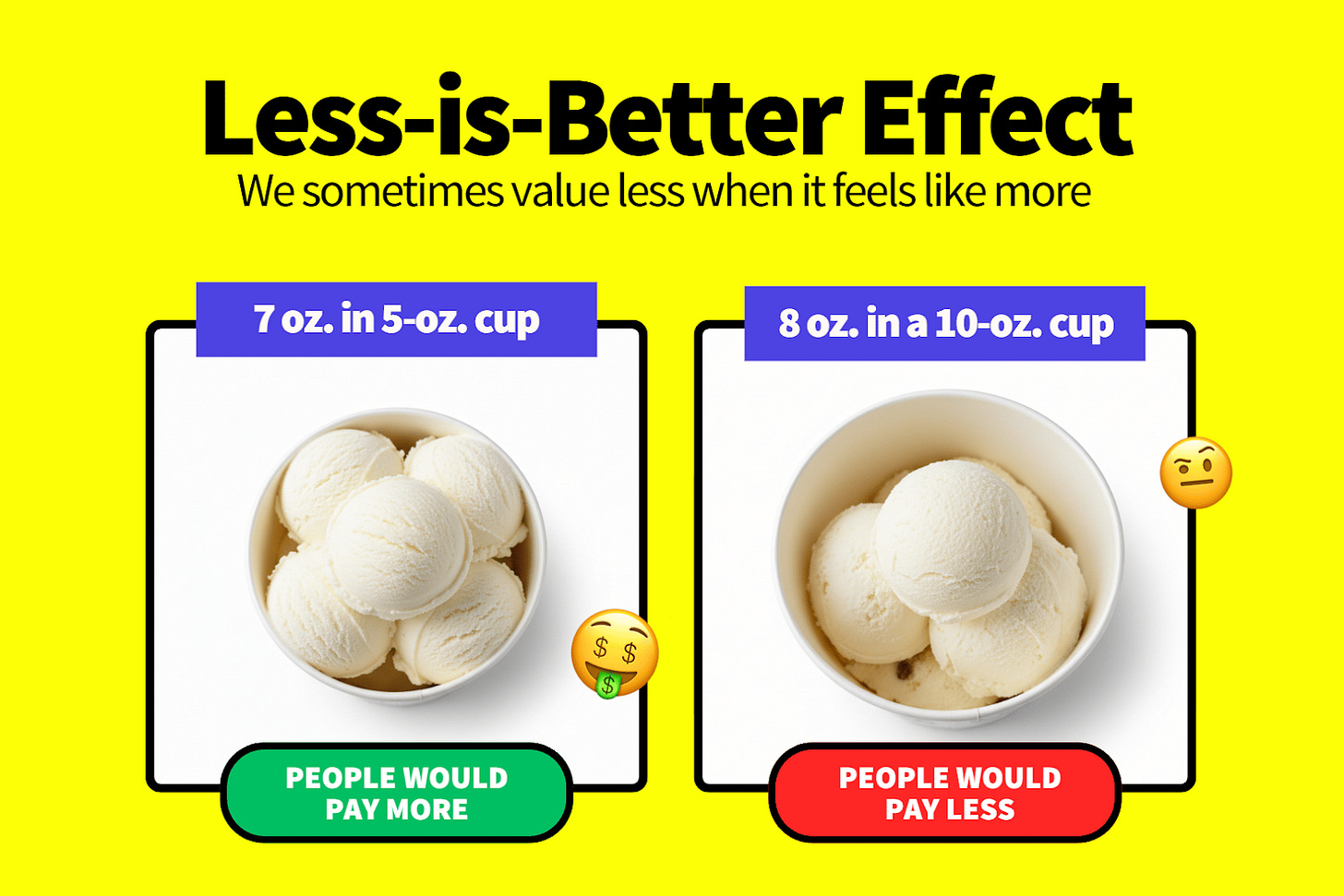
Most buyers believe they choose based on value. In reality, they choose based on what feels valuable at first glance. One cognitive bias explains this clearly: the less-is-better effect.
When people evaluate a single option on its own, they rely on easy visual or emotional cues rather than objective facts. A smaller option that looks premium can feel more valuable than a larger option that looks incomplete or underwhelming. But when options are compared side by side, logic kicks in and true quantity or value becomes obvious.
This matters because most products are evaluated in isolation. Product pages, ads, and landing screens rarely invite direct comparison. That gives presentation far more power than raw specs.
How the Less-is-Better Effect Works
When something is shown alone, the brain avoids effort. It judges based on what is easiest to assess: fullness, elegance, simplicity, or perceived quality. When multiple options are shown together, the brain switches to analytical mode and compares facts like size, quantity, or price per unit.
Smart brands design for isolated evaluation, not comparison shopping.
Steps to Apply the Less-is-Better Effect
1️⃣ Design for Standalone Evaluation
Assume your product will be judged alone. Optimize packaging, visuals, and framing so it feels complete and premium without needing context.
2️⃣ Use Presentation to Signal Quality
Smaller or limited versions can feel more valuable when they are thoughtfully designed. Clean visuals and intentional sizing signal confidence.
3️⃣ Avoid Overloading With Metrics
Too many numbers invite comparison. Focus attention on the experience, convenience, or outcome instead of raw quantity.
4️⃣ Frame Less as Intentional
Smaller can imply precision, care, or exclusivity. Position it as a deliberate choice, not a compromise.
5️⃣ Control the Comparison Environment
If you want customers to feel value emotionally, limit side-by-side comparisons. Guide attention toward benefits rather than ratios.
The Takeaway
Customers do not always choose what is objectively better. They choose what feels better in the moment. When you design products and offers to be evaluated in isolation, less can genuinely feel like more. And when less feels better, people are willing to pay for it.
📝 Run Real-Time Market Research With Grok
Staying on top of market trends used to mean manually scrolling Twitter, bookmarking articles, and stitching together notes from dozens of sources. That approach does not scale. Grok, built by xAI, changes this by turning live social data into structured, daily research you can actually act on.
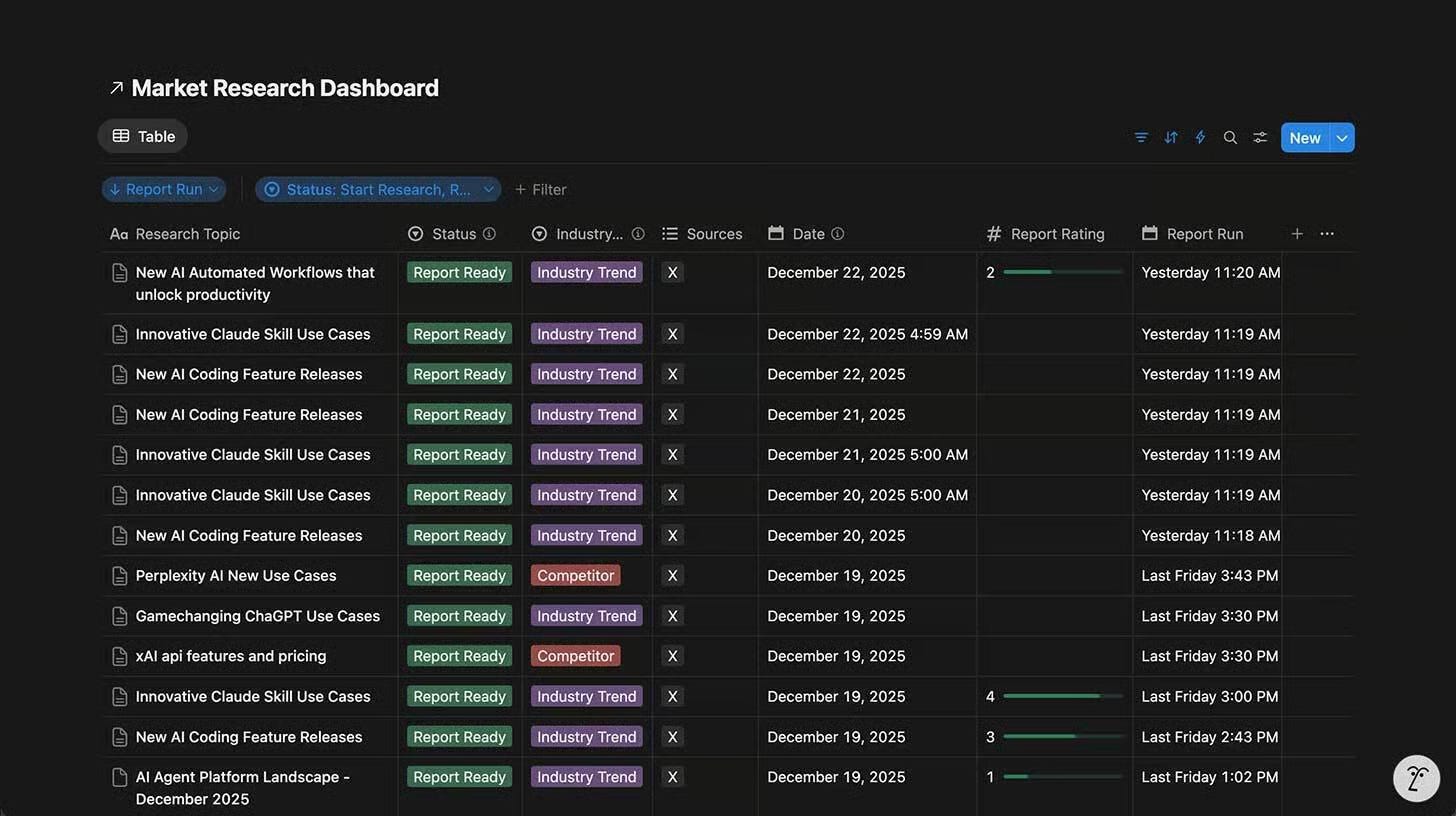
By combining Grok’s real-time access to X data with simple automation, you can track trends, competitors, and breaking narratives from the last 24 hours and turn them into clean research memos inside Notion. The result is a lightweight system for continuous market intelligence without manual effort.
Steps to Perform Market Research Using Grok
1️⃣ Prepare Your Research Hub
Start by duplicating a Notion database template that will store your research. Create fields for topic, date, industry or competitor, sources, and status. This database becomes your command center for daily insights.
2️⃣ Set Up Grok API Access
Head to the xAI console, generate an API key, and fund your account with a small balance. This allows Grok to query recent conversations, trends, and news from X in real time.
3️⃣ Import the Automation Blueprint
Log into Make and create a new scenario. Import the provided blueprint file so the workflow structure is already built for you. This saves time and removes setup guesswork.
4️⃣ Connect Grok and Notion
Inside the scenario, connect the Grok module using your API key. Then authorize the Notion module so it can write directly into your database.
5️⃣ Trigger Research Automatically
Copy the webhook URL from Make and paste it into your Notion database automation. Set it to trigger when a row status changes to “Start Research.” This turns each row into a research request.
6️⃣ Test and Iterate
Create a new entry, fill in the topic and context, and change the status. Grok pulls recent data, summarizes insights, and writes a structured memo back to Notion.
The Takeaway
Grok turns social noise into signal. By pairing real-time data with simple automation, you get fresh market research delivered daily, without manual scrolling or fragmented notes. Instead of reacting late, you stay ahead with consistent, actionable insight.
We'd love to hear your feedback on today's issue! Simply reply to this email and share your thoughts on how we can improve our content and format.
Have a great day, and we'll be back again with more such content 😍