Pain Sells More Than Pleasure
🔥 Turn fear into conversions, and an AI-powered sales workflow

Hello Readers 🥰
Welcome to today's edition, bringing the latest growth stories fresh to your inbox.
If your pal sent this to you, then subscribe to be the savviest marketer in the room😉
In Partnership with Grapevne
📲 Whitelisting That Actually Scales (Creators + Publishers)
Most brands know whitelisting works to lower CPAs and find new audiences. Few can make it repeatable at scale.
Grapevine gives you both creator and publisher networks in one managed service:
Creator Whitelisting - They source, vet, and negotiate with verified creators (doctors, coaches, finance experts, beauty insiders), managing and handling access and production. Authentic social proof without operational chaos.
Publisher Whitelisting - Their network of 14+ niche publishers (including My Subscription Addiction) provides advertorial landing pages and established handles. You get third-party trust plus storytelling space that bridges discovery to conversion.
Whitelisted content outperforms branded ads by 20-30%. Creator + publisher handles deliver signal diversity and testing volume that's hard to replicate independently.
Mapping Q1 creative strategy? Now's the time to test.
👉 Book a strategy call by February 27th for $500 off your first campaign.
📝 The Psychology of Approach and Avoidance Motivation
Why do people really buy?
At the core of nearly every decision are two forces. We act to gain pleasure or to avoid pain. Modern psychology calls this approach avoidance motivation. And research shows something powerful. The pain of losing is about twice as severe as the pleasure of gaining.
That means avoiding loss often drives faster action than chasing rewards.
Smart marketers understand this and apply it strategically.
Steps to Apply Pain First Persuasion:
1️⃣ Lead With The Risk
Start by highlighting what your audience might lose if they do nothing. Missed revenue. Wasted budget. Stalled growth. The more specific the pain, the more real it feels.
2️⃣ Make The Pain Vivid
Generic discomfort does not convert. Sharp, concrete consequences do. When buyers can clearly imagine the downside, their brain shifts into protection mode.
3️⃣ Offer Immediate Relief
Do not stop at fear. Once tension is created, present a clear path forward. Show how your solution removes the risk and restores control. Pain grabs attention. Relief drives conversion.
4️⃣ Use Pattern Interrupts In Ads
Scroll-stopping creative often works because it triggers a threat response first. A sudden negative scenario captures attention. Follow it quickly with reassurance and protection.
5️⃣ Activate Curiosity In Emails
Subject lines that hint at costly mistakes or missed opportunities trigger the brain’s danger detector. Just be sure to close the loop inside the email to maintain trust.
The Takeaway
People are wired for survival. Avoiding loss usually feels more urgent than achieving gain. The most effective copy does not rely on hype. It surfaces as a real pain, then clearly shows the escape. When you combine discomfort with direction, you move readers from passive interest to decisive action.
📝 Build an AI-Powered Sales Objection Handler
Most teams record sales calls but never fully leverage them. Hidden inside those transcripts are patterns, recurring objections, and missed opportunities. Instead of letting that data collect dust, you can turn it into a structured objection handling system in under an hour per week.
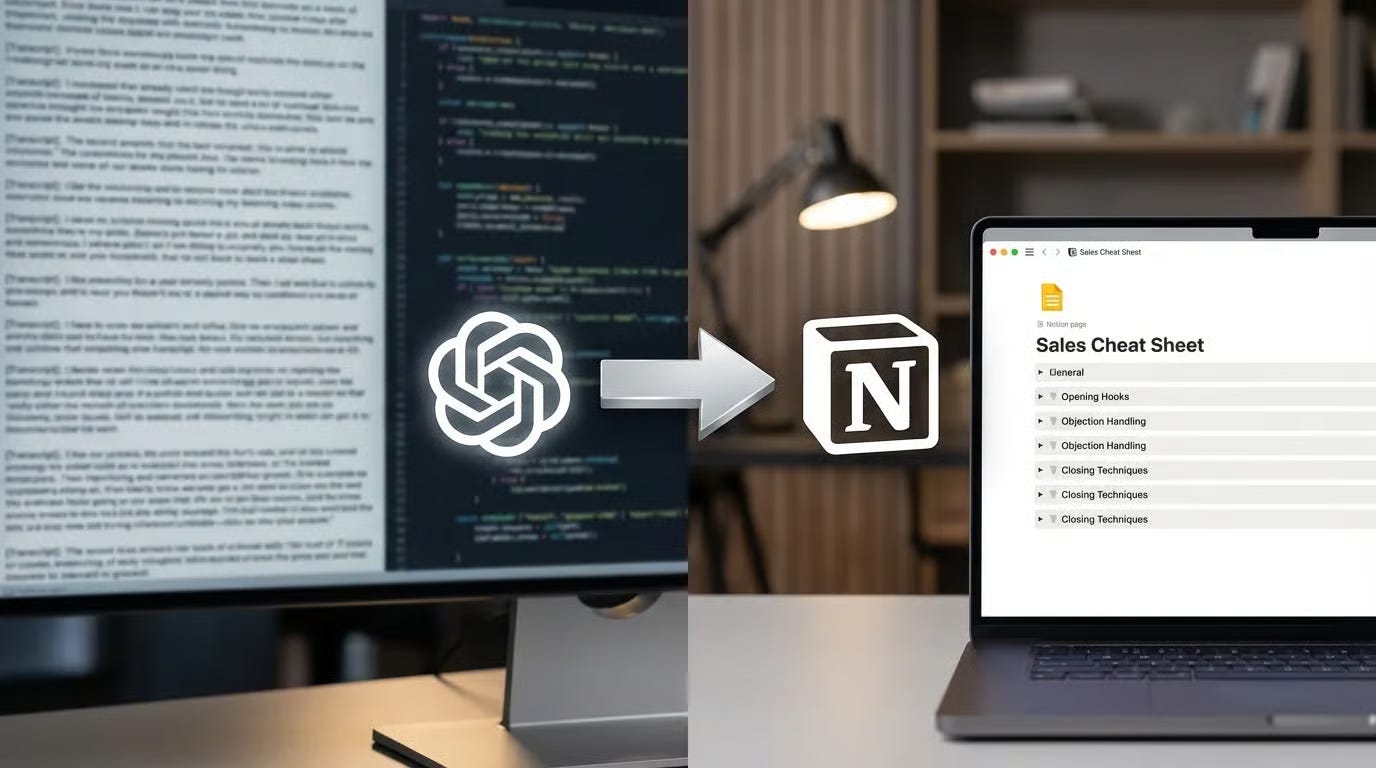
Steps to Create Your Weekly Objection Report:
1️⃣ Set Up a Dedicated Project
Create a new project titled Sales Objections. Upload a document outlining your product lines, pricing, positioning, and core offers. This gives the AI the context it needs to generate accurate rebuttals aligned with your messaging.
2️⃣ Add Clear Processing Instructions
In the project settings, add structured instructions such as:
Read the attached transcripts and create a weekly report. For every objection, number it, state it clearly, add three bullets describing context, identify which prospect raised it, and provide two short, punchy rebuttals.
This ensures consistent formatting every week.
3️⃣ Upload Weekly Transcripts
At the end of each week, upload your sales call transcripts. Make sure each file includes the client name and call date. Start a new thread and ask the AI to generate the weekly objection report.
4️⃣ Organize in Your Knowledge Base
Create a blank page in your documentation tool. Add a toggle heading labeled with the week. Paste the generated report inside. Over time, you will build a searchable objection library.
5️⃣ Connect Your Workspace
Link your documentation tool so the AI can reference past weeks. This allows it to detect patterns and refine responses over time.
The Takeaway
Instead of reacting to objections live on calls, you prepare in advance. Within weeks, your team will have a living playbook of real-world objections and tested responses that sharpen close rates and shorten sales cycles.
We'd love to hear your feedback on today's issue! Simply reply to this email and share your thoughts on how we can improve our content and format.
Have a great day, and we'll be back again with more such content 😍