How brands win Q1
📅 How smart brands prep Q1, plus how to track trends daily with Grok

Hello Readers 🥰
Welcome to today's edition, bringing the latest growth stories fresh to your inbox.
If your pal sent this to you, then subscribe to be the savviest marketer in the room😉
In Partnership with The Operator’s Stack
100+ Days of Campaign Data. Zero Guesswork.

Your funnel didn’t just slow down; it’s being rewired against you. Buyers no longer follow the neat paths you designed. They’re ghosting faster, clicking less, and vanishing mid-funnel.
This isn’t another “trends list.” Our team spent 100+ days dissecting real campaigns to uncover three purchase-path shifts dismantling traditional funnels.
Inside, you’ll find immediate-use systems like the Community Cultivation Canvas, Emotional Storytelling Framework, and Owned Media Checklist, all ready to deploy today.
You’ll also unlock over $900 worth of bonus systems, including:
- Storytelling frameworks
- Brand positioning playbooks
- Referral ROI models
- Partnership campaign templates
- Community growth strategies
- Cashflow simulators
- Unit economics analyzers
- Supplier negotiation scripts
Plus: 2,000+ Viral Video Hooks (updated monthly) to keep you ahead of the curve.
The market has already shifted. This is your chance to adapt before “next quarter” becomes “too late.”
Download your bundle now and rebuild your funnel before buyers disappear!
✏️ Start Your Q1 Planning
Q4 is loud, fast, and revenue-heavy. But it is also the most important setup window for Q1. While most brands are fully focused on holiday pushes, the teams that win January are already planning what comes next.
If you want lower CPAs, faster scaling, and stronger creative momentum, now is the time to act.
Steps to Prepare for a Strong Q1:
1️⃣ Map Your Q1 Seasonal Moments
Start by identifying the cultural moments your brand can realistically own. Common Q1 spikes include New Year reset behavior, major live events, and gifting occasions. Each moment should have a clear angle, message, and budget plan tied to what your audience already cares about.
2️⃣ Plan Creative Around Intent Shifts
Q1 is about fresh starts, motivation, and change. Refresh your value propositions to match that mindset. Use Q4 learnings to shape messaging that feels timely, not recycled. This is where small creative shifts can unlock big gains.
3️⃣ Use Q4 Traffic to Test
High traffic periods are ideal for learning. Run lightweight tests on hooks, formats, and offers now. Identify what resonates and carry those winners into Q1 with confidence instead of guessing.
4️⃣ Budget by Day, Not Month
Monthly budgets hide mistakes. Map key dates, promos, and ramps day by day. Work backward from revenue goals so testing windows and scaling periods are properly funded.
5️⃣ Lock Decisions Early
Creative direction, launch timelines, and budget ranges should be decided before the year ends. This prevents the January scramble that slows execution.
The Takeaway
Winning Q1 is not about working harder in January. It is about planning smarter in December. Front-load testing, define your seasonal moments, and structure budgets early so you start the year ready to scale, not rushing to catch up.
🧪 Run Real-Time Market Research With Grok
Keeping up with fast-moving trends is hard. Twitter conversations shift by the hour, news cycles reset daily, and competitor moves often surface on social before they show up anywhere else. Manually tracking all of this takes that time most teams do not have.
This workflow turns real-time social data into a daily research system. By combining Grok for live trend analysis with Notion and Make, you can automatically generate structured research memos on any topic, industry, or competitor without starting from scratch each day.
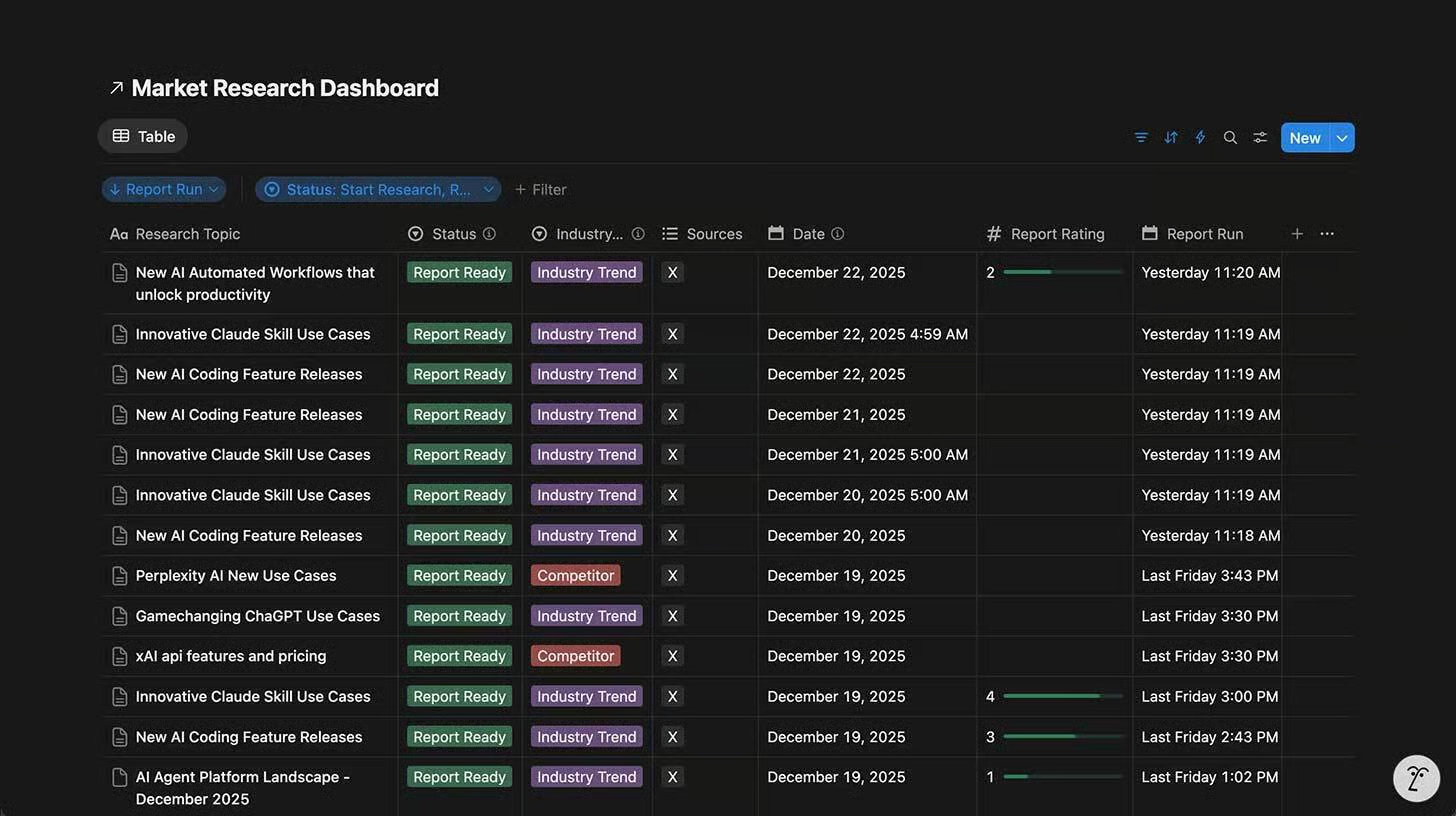
Steps to Build a Real-Time Research Pipeline Using Grok:
1️⃣ Set Up Your Research Hub
Start by creating a Notion database that will act as your research command center. Each row represents one research request, such as a trend, keyword, or competitor. Key fields should include topic, date, industry, sources, and status.
2️⃣ Connect Grok for Live Data
Grok is designed to analyze recent Twitter activity and news from the last 24 hours. By connecting it through an API, you can query what people are talking about right now instead of relying on stale summaries.
3️⃣ Automate the Workflow With Make
Use Make to connect Grok and Notion. The automation listens for a trigger in Notion, then sends the research topic to Grok, collects insights, and formats them into a clean memo.
4️⃣ Trigger Research On Demand
Inside Notion, flip a status field like “Start Research.” That action fires the automation, runs the analysis, and writes the findings back into the database entry.
5️⃣ Standardize the Output
Have the memo include key themes, notable tweets, emerging narratives, and why the trend matters. Consistency makes insights easier to scan and compare over time.
6️⃣ Schedule Daily Updates
For ongoing topics, set a daily trigger so a fresh memo is generated every day. This keeps your team informed without manual effort.
The Takeaway
Market research does not have to lag behind reality. By pairing Grok’s real-time intelligence with simple automation, you turn social noise into daily, decision-ready insights that update themselves.
We'd love to hear your feedback on today's issue! Simply reply to this email and share your thoughts on how we can improve our content and format.
Have a great day, and we'll be back again with more such content 😍